Wednesday, April 14, 2010
American Lit You Twobe
Buckingham page 23
Although Dickinson, 1830-1886,was a prolific private poet, fewer than a dozen of her nearly eighteen hundred poems were published during her lifetime. The work that was published during her lifetime was usually altered significantly by the publishers to fit the conventional poetic rules of the time. Dickinson's poems are unique for the era in which she wrote; they contain short lines, typically lack titles, and often use slant rhyme as well as unconventional capitalization and punctuation. (wiki)
Unique For Her Time…
What other forms of entertainment are new for their time?

Fish- Dolphin- Sea Turtle- How does Baby Einstein Work?
Okay- I'm guilty- I admit it- I let me children watch TV before two years of age despite that being the recommended age by the "professionals." Whew -- that felt good, I truly needed to get that off my chest. All I know is that it is 7:56am- I am sitting at my computer doing homework, and my son is peacefully sitting close by and he is naming all the animals he sees on Baby Einstein: World Animals. These tapes have come under fire-http://www.mediafamily.org/mediawisecolumns/baby_einstein_mw.shtml and article by Dr. Dave of the National Institute on Media & the Family, who believes, "The lure of the product appeals to the hopes of every new parent who wants her baby to get a jumpstart on achievement. That sounds nice, but there's an implied threat here too: if you deprive your little one of this wonderful product you will relegate him to a lifetime of stupidity... Very simply put, it gets kids hooked on screens before they can even crawl. There's nothing wrong with the colorful and child-friendly content. The problem is that the videos wire the growing brain to expect constant entertainment and to always look to the screen for everything good in life." What a convincing statement.
But I tell ya- I didn't expect my kids to become little einsteins- just to sit still a little bit-and learn while hearing classical music. Right now- right this second my son is waddling over to me with a blanket draped over his head, "i wanna sit wi' momma'- okay time to go now.... tbc
But I tell ya- I didn't expect my kids to become little einsteins- just to sit still a little bit-and learn while hearing classical music. Right now- right this second my son is waddling over to me with a blanket draped over his head, "i wanna sit wi' momma'- okay time to go now.... tbc
Monday, April 5, 2010
Exit Strategies
Our group presentation should be a way to utilize the effectiveness of media in teaching English/Language Arts in a classroom. This assignment will show one small way that social networking sites can be used to directly connect with literature.
Monday, March 29, 2010
Alright Gee Go Ahead
Well this post is still under construction, but I did have some great lesson ideas after this new topic began.
-Asking students to create fake profile/avatar for the character in class assigned book. Imagine a facebook for Huckleberry Finn, with his own personal quote from the book and personal info based on the novel. Grading would be based on how much the student used the book for evidence and inspiration.
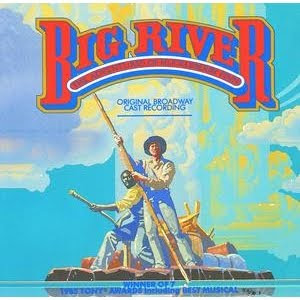
-Having some type of reward in the classroom that is connected to media- video game for those that finish early, etc. I'm not sure what this would look like yet....
-Maybe allowing students to bring in their favorite YouTube clip. This could be assigned monthly with one student per day. I would have certain guidelines, no R rated etc., and would ask the kids to email them to me ahead of time. Students without access to computers could come after school or use the last 5 minutes of class time to browse mine. This would be a fun exercise to look forward to, and we could just have open discussion time regarding the clip. The question is if these are clips related to anything specific we are doing in class- or just random which we could still analyze. I am trying to figure out how to use media to analyze media.
-An assignment where the students design/write about their own video game based off the novel, short story, poem we are covering in class. Perhaps a 5 act 5 level Othello, with battle scenes and mind games with Iago? I prefer the old platform model, think Donkey Kong, but students would be free to choose the style and resolution quality etc. I wonder if this would work for the girls in the class too? A problem is if the students should gain agency in the game and wield power and influence over the characters. Would sweet Desdemona change her fate, or should the students keep it classic?
-Asking students to create fake profile/avatar for the character in class assigned book. Imagine a facebook for Huckleberry Finn, with his own personal quote from the book and personal info based on the novel. Grading would be based on how much the student used the book for evidence and inspiration.
-Having some type of reward in the classroom that is connected to media- video game for those that finish early, etc. I'm not sure what this would look like yet....
-Maybe allowing students to bring in their favorite YouTube clip. This could be assigned monthly with one student per day. I would have certain guidelines, no R rated etc., and would ask the kids to email them to me ahead of time. Students without access to computers could come after school or use the last 5 minutes of class time to browse mine. This would be a fun exercise to look forward to, and we could just have open discussion time regarding the clip. The question is if these are clips related to anything specific we are doing in class- or just random which we could still analyze. I am trying to figure out how to use media to analyze media.
-An assignment where the students design/write about their own video game based off the novel, short story, poem we are covering in class. Perhaps a 5 act 5 level Othello, with battle scenes and mind games with Iago? I prefer the old platform model, think Donkey Kong, but students would be free to choose the style and resolution quality etc. I wonder if this would work for the girls in the class too? A problem is if the students should gain agency in the game and wield power and influence over the characters. Would sweet Desdemona change her fate, or should the students keep it classic?
Monday, March 22, 2010
Media Education: Literacy, Learning and Contemporary Culture
HA- First of all this title amuses me because I looked at the cover of the book, noticed it was all in lower case letters- but because of my traditional education couldn't bring myself to not capitalize.
Anyway- the first page of this book has, probably, one of the most profound statements I've read- regarding such things- in a long time. Chapter 1 opens up with a definition of media, including mediums, which are, "something we use when we want to communicate with people indirectly, rather than in person or by face-to-face contact... The media do not offer a transparent window on the the world. They provide channels through which representations and images of the world can be communicated indirectly. "The media intervene: they provide us with selective versions of the world, rather than direct access to it." This is freaky stuff- could this be the major definition of the new age of man- our tools aren't bronze but fiber optics and radiowaves- the invisible and indirect.
AHHH How much of the world have I been experiencing indirectly???
Wednesday, March 17, 2010
Tricksters: Reliably Unreliable

This whole classification of myths was new to me- and I really liked the way the text grouped the types. After seeing the presentations I was made eerily aware of some of the cosmic connections that have continued for thousands of years. The relationship of fathers and sons is interesting, and whether Norse or Greek there was drama. Our trickster group was able to find many modern examples- because let's face it- in this relative generation we are living in the trickster times. Not male divine, not female- trickster- at least in America. Where evil can be good and good evil- all is supposedly subjective and enlightened- but I think it is just another cycle with a title. Postmodern times are reliably unreliable, and it still seems slightly stale to even try and talk about this whole thing. I do think that tricksters are doing so well today perhaps because of years of suppression. Africans and American Indians have some of the strongest trickster characters, and their cultures were squelched until recently. To have the trickster be the creator or one person with long term vision is frightening to traditional western thinking. I think it is a mistake to always associate him with the devil, but see how people in power could think of "him" as a negative influence. Maybe he is confusion incarnate- the kind that makes you work things out for yourself. As discussed in the outline our group gave out- to define a trickster is pointless- but maybe that is the point. tricky.
Monday, March 8, 2010
Mythology Reflected
The  text "Myth & Knowing" has an adaquate collection of world mythology with valuable introductions for each section. In addition to the trickster chapter I was assigned, I read the first section which outlines the purposes and definitions of mythology. My knowledge keeps getting brought back to Plato and his theories- this guy is everywhere and I can't get away from him! I most enjoyed the history of logos versus mythos. I like to think that logos are the events inspired by mythology that are based on true historical events, while the mythos relies on manmade discourse- like the archtypes and plot stories. tbc
 text "Myth & Knowing" has an adaquate collection of world mythology with valuable introductions for each section. In addition to the trickster chapter I was assigned, I read the first section which outlines the purposes and definitions of mythology. My knowledge keeps getting brought back to Plato and his theories- this guy is everywhere and I can't get away from him! I most enjoyed the history of logos versus mythos. I like to think that logos are the events inspired by mythology that are based on true historical events, while the mythos relies on manmade discourse- like the archtypes and plot stories. tbc
Subscribe to:
Posts (Atom)